

Why Does Understanding Precious Metals and Currency Matter?
How Does the Currency-Commodity Connection Actually Work?
The currency-commodity connection describes the mechanical link between fiat currency strength and the spot price of assets like gold and silver. Because metals trade globally in US dollars, any shift in dollar value immediately affects what buyers in every other currency must pay, altering worldwide demand even when underlying supply fundamentals stay unchanged.
The Mechanics of Inverse Correlation
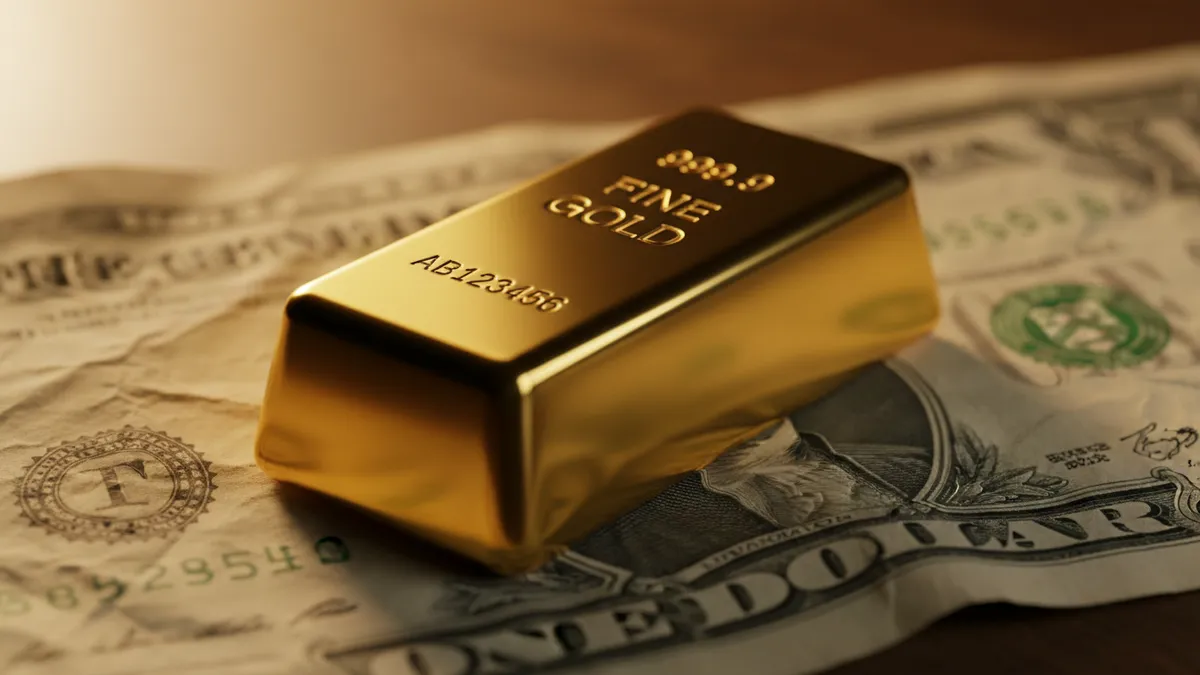
Gold is priced globally in US dollars. When the dollar weakens, gold becomes cheaper for holders of other currencies, stimulating demand and pushing prices higher. The reverse is equally true. This inverse relationship means forex movements directly affect metal pricing, even when supply and demand fundamentals stay flat.
Understanding the currency impact on precious metal prices goes beyond watching headlines. It means reading the mechanics beneath the market, knowing why a Federal Reserve announcement can move bullion prices within minutes, or why central bank buying in one country ripples into spot prices worldwide. If you need a single framework for timing decisions around physical assets, this is it.
Local Currency Pricing vs. Global Spot Price
Understanding this distinction is essential for protecting purchasing power in practical terms. When your local currency weakens, the global price of gold doesn’t change, your ability to buy it does.
Consider a concrete example: if the British pound drops 10% against the dollar, British investors must spend roughly 10% more pounds to buy the same ounce of gold, even though the global spot price hasn’t moved. This happened sharply after the 2016 Brexit vote, when sterling fell and UK gold prices surged overnight, not because gold changed, but because the currency did.
The same dynamic plays out wherever a local currency comes under pressure. In those environments, demand for physical precious metal tends to spike, as people shift out of paper assets into something tangible. Jewelry, coins, and bullion bars all see increased buying interest when confidence in a currency erodes, a pattern that repeats across every continent and every era.
The Role of the US Dollar as the Global Benchmark
Gold, silver, platinum, and palladium are priced in US dollars on global markets because the dollar has functioned as the world’s reserve currency since the Bretton Woods Agreement of 1944. Nearly every commodity trade, from crude oil to copper, settles in USD, making it the universal measuring stick for value. Metal pricing worldwide is therefore anchored to dollar movements in a way that no other currency replicates.
This creates a direct mechanical relationship. When the dollar strengthens, foreign buyers, whether a jeweler in Tokyo or a central bank in Frankfurt, must spend more of their local currency to purchase the same ounce of gold. That added cost suppresses demand and typically pushes precious metal prices lower. A weakening dollar does the opposite: foreign buyers get more metal per unit of their own currency, stimulating demand worldwide and driving prices higher.
The table below summarizes the core relationship:
| Dollar Direction | Effect on Foreign Buyers | Typical Metal Pricing Move |
|---|---|---|
| Dollar strengthens | More local currency needed per ounce | Prices fall |
| Dollar weakens | Less local currency needed per ounce | Prices rise |
| Dollar stable | No change in relative cost | Driven by other supply/demand factors |
Monitoring the US Dollar Index (DXY) is therefore a practical first step for any metals investor who needs to know whether current spot levels reflect genuine asset demand or simply dollar weakness.
How Do Inflation and Currency Devaluation Affect Precious Metal Prices?
Inflation and currency devaluation erode the purchasing power of paper money over time, which is precisely why understanding investing in physical gold as a hedge matters, they hold value that no government decree can reduce.
Protecting Purchasing Power Through Precious Metals
Currency devaluation happens when central banks expand the money supply faster than economic output grows, deliberately or through crisis response. The result is systemic inflation: each unit of currency buys less over time. Gold and silver hold value that no government can print away.
When the Federal Reserve’s quantitative easing programs expanded the balance sheet from roughly $900 billion to over $4 trillion between 2008 and 2014, gold climbed from around $800 to a then-record $1,900 per ounce by 2011. That increased supply of dollars diluted purchasing power, and precious metal prices adjusted upward to reflect the new reality. Estate holdings, gold jewelry with melt value, and coin collections all benefited as a direct result.
Metal pricing in that environment rewarded sellers who understood the macro context. If you’re selling precious metals, whether inherited estate pieces or bullion coins bought years ago, a period of dollar weakness is often the most favorable time to act. Spot levels are elevated, demand is strong, and a knowledgeable buyer will pay closer to full market value because the underlying asset is actively appreciating. In Boca Raton and across South Florida, sellers who understand this timing consistently capture better outcomes than those who sell reactively without first checking the macro environment.
The Blackthorn Gold Perspective on Selling Timing
Blackthorn Gold, a precious metal buyer serving the Boca Raton area, has worked with clients through multiple currency cycles. The Blackthorn Gold team consistently observes that clients who know current spot levels before walking in, and who understand whether the dollar is in a period of strength or weakness, negotiate from a position of informed confidence. That knowledge gap between informed and uninformed sellers is often worth hundreds of dollars on a single transaction.
Safe-Haven Assets During Economic Turmoil
The safe-haven demand for gold and silver shows up in the physical market just as clearly as in the futures market. The pattern repeated sharply in 2020, when pandemic-era stimulus pushed gold past $2,000 for the first time. Historically, hyperinflationary episodes in Venezuela and Zimbabwe saw citizens turn to precious metals when local currency became functionally worthless, a clear demonstration of why understanding precious metals as a store of value matters even outside of investment portfolios.
That safe-haven demand increased measurably in beach communities with older, asset-rich populations, like those along Florida’s Gold Coast, where heightened interest in both buying and selling physical metal spikes during periods of economic uncertainty. Blackthorn Gold in Boca Raton sees this pattern directly: foot traffic increases when global events drive dollar volatility, because estate jewelry, gold coins, and inherited bullion all carry real melt value that fluctuates with spot. Understanding the difference between numismatic vs bullion value is essential before any sale.
How Do Traders Use Forex-Metal Correlations?
Forex movements often signal metal pricing shifts before they fully materialize in spot quotes, giving attentive traders a measurable edge. Understanding precious metals in a forex context turns market noise into actionable signals. Comparing silver vs gold coins is one practical starting point for anyone building a position in physical metals.
Tracking the US Dollar Index (DXY)
The DXY measures the dollar against a basket of six major currencies. When DXY drops, gold and silver’s industrial demand backdrop makes it particularly responsive to price moves. Overlay a live DXY chart against spot gold on platforms like TradingView to spot divergences early. A sustained DXY break below a key support level, say, 100, often precedes meaningful moves in both metals. For those weighing their options across the metals complex, our comparison of platinum and palladium vs gold is worth reading alongside any forex analysis.